Why Every Tech Startup Needs a Chinese Money Plant on the Desk
In the high-stakes, fast-paced world of tech startups, every element on a founder’s desk is intentional. From high-refresh-rate monitors to ergonomic setups, entrepreneurs optimize every square inch for maximum performance. Yet, despite state-of-the-art tech, many workspaces lack the one simple element that bridges the gap between relentless hustle and sustained mental clarity.
Tech teams regularly endure 12-hour days anchored to their screens, battling developer fatigue, stale office air, and the overwhelming pressure to stretch runway. In the mad dash to scale, workspaces often degrade into sterile, high-stress environments that drain creative energy rather than ignite it. Traditional office perks like free coffee and ping-pong tables only go so far when daily burnout sets in.
Enter Pilea peperomioides, universally recognized as the chinese money plant. With its striking, coin-shaped foliage and sleek modern look, this resilient botanical addition is rapidly becoming the ultimate desk accessory for venture-backed founders and engineering teams alike. Beyond its distinct aesthetic appeal, the chinese money plant delivers a potent mix of prosperity symbolism, air-purifying benefits, and stress-reducing properties engineered for high-pressure environments.
In this guide, we will examine why adding a chinese money plant to your workstation is far more than an interior design trend—it is a low-effort, high-return investment in your startup’s workspace culture, focus, and long-term vitality.
Table of Contents
The Symbolism of Prosperity: Attracting Wealth to Your Startup
In the high-stakes world of technology startups, every detail in your work environment influences focus, energy, and performance. While venture capital, product-market fit, and burn rates dictate financial survival, the psychological and environmental cues surrounding your team play an understated role in long-term success. Integrating a chinese money plant into your office layout bridges centuries of cultural tradition with modern workplace psychology, creating a subtle yet powerful engine for an abundance mindset.
Feng Shui and the Architecture of Financial Growth
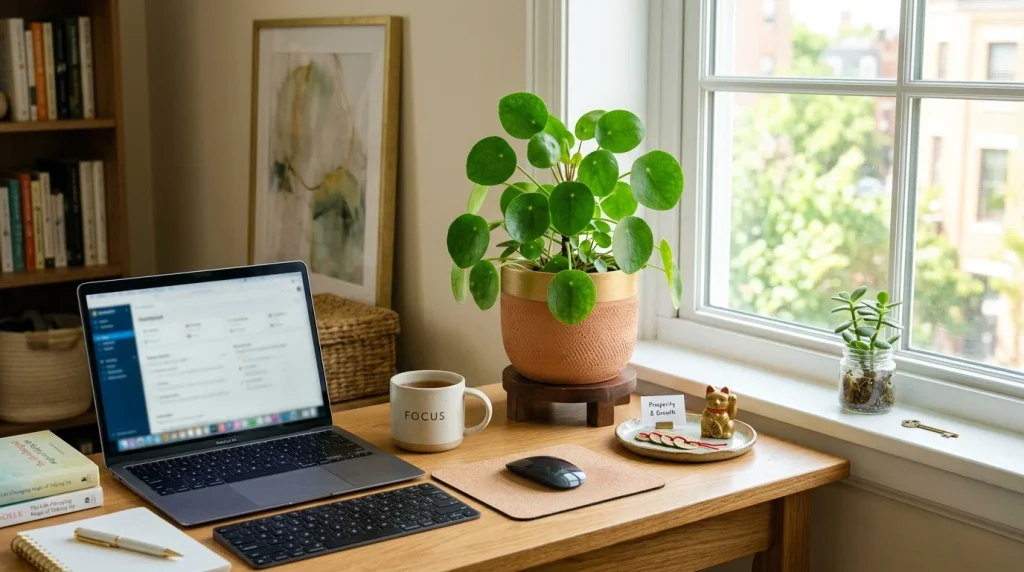
Dating back centuries, traditional Feng Shui practices have utilized specific plants to balance energy (Chi) and attract prosperity into living and working spaces. The chinese money plant (Pilea peperomioides) is prized in spatial design due to its signature foliage: perfectly smooth, bright green, coin-shaped leaves that resemble stacked currency.
According to Feng Shui principles, round leaves promote a smooth, frictionless flow of positive energy, contrasting with sharp-edged plants (like certain cacti) that can introduce unwanted tension into high-stress environments. To maximize its symbolic financial impact on your workstation or office layout, consider strategic placement:
- The Southeast Sector (Wealth Corner): In the Bagua energy map, the southeast area of any room or desk governs wealth and financial abundance. Placing your chinese money plant here signals intentional focus on revenue generation and capital growth.
- Near the Primary Workstation Display: Positioning the plant within your peripheral vision while coding, pitching, or reviewing financials keeps the visual anchor of growth active throughout your working day.
- The Reception or Boardroom Table: Setting a healthy specimen in high-visibility client areas projects stability, vigor, and organizational vitality to visiting investors and prospective hires.
Cognitive Priming: Cultivating an Abundance Mindset
Beyond traditional lore, the visual presence of a thriving chinese money plant offers tangible psychological benefits grounded in cognitive priming. Startups frequently operate under scarcity mindsets—navigating tight runways, hardware bottlenecks, or intense sprint deadlines. Over time, constant exposure to scarcity signals can restrict creative problem-solving and risk assessment.
A vibrant botanical display acts as a subconscious counterweight. Its steady, bright growth offers a daily visual cue of compounding returns. Watching fresh, coin-shaped leaves unfurl from the central stem reinforces a narrative of expansion, resilience, and steady progress—the exact mental framework required when bootstrapping an early-stage venture or navigating complex fundraising rounds.
The “Pass-It-Along” Phenomenon: Organic Scaling and Network Effects
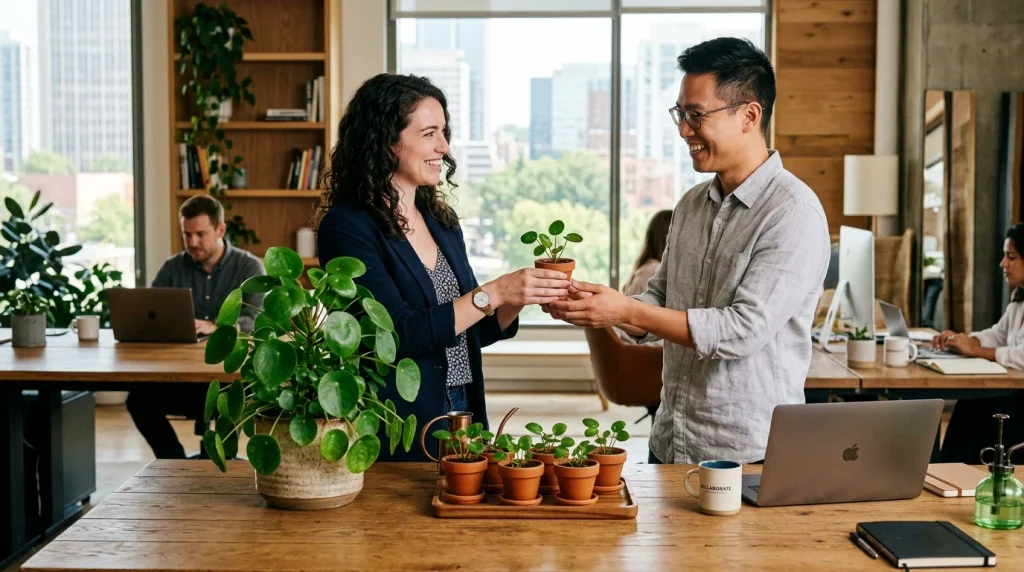
Perhaps the most compelling metaphor for tech teams is the unique reproductive nature of Pilea peperomioides. Often nicknamed the “Pass-It-Along Plant,” a mature chinese money plant naturally produces small offshoots, commonly referred to as “pups,” directly from its root system and stem.
These pups are effortless to propagate. A founder or team lead can gently separate a miniature plantlet, root it in water or soil, and gift it to a team member, advisory board member, or fellow founder within their incubator space. This physical habit mirrors core tech principles:
- Scalability: A single healthy plant continuously generates new assets without requiring significant additional resources.
- Network Effects: Sharing offshoots across departments or with co-working peers creates shared ritual and camaraderie, spreading positive company culture organically.
- Paying It Forward: Gifting a propagated plant symbolizes sharing success, mentorship, and equity—foundational values of high-performing startup ecosystems.
By embedding a plant that literally multiplies itself over time into your team’s everyday space, you establish a physical embodiment of your startup’s ultimate goal: sustainable, exponential growth.
Low-Maintenance Care Perfect for Busy Founders
In the fast-paced world of tech startups, bandwidth is a precious commodity. Founders, developers, and product managers rarely have the time to pamper delicate flora that require precise humidity levels or complex feeding schedules. Fortunately, the chinese money plant (Pilea peperomioides) is practically engineered for high-stress, fast-moving work environments. It is a resilient, forgiving species that yields high aesthetic and psychological returns on minimal effort.
To keep your workspace greenery thriving alongside your venture, follow this streamlined, low-friction care protocol designed specifically for busy professionals.
1. Strategic Placement: Bright, Indirect Light
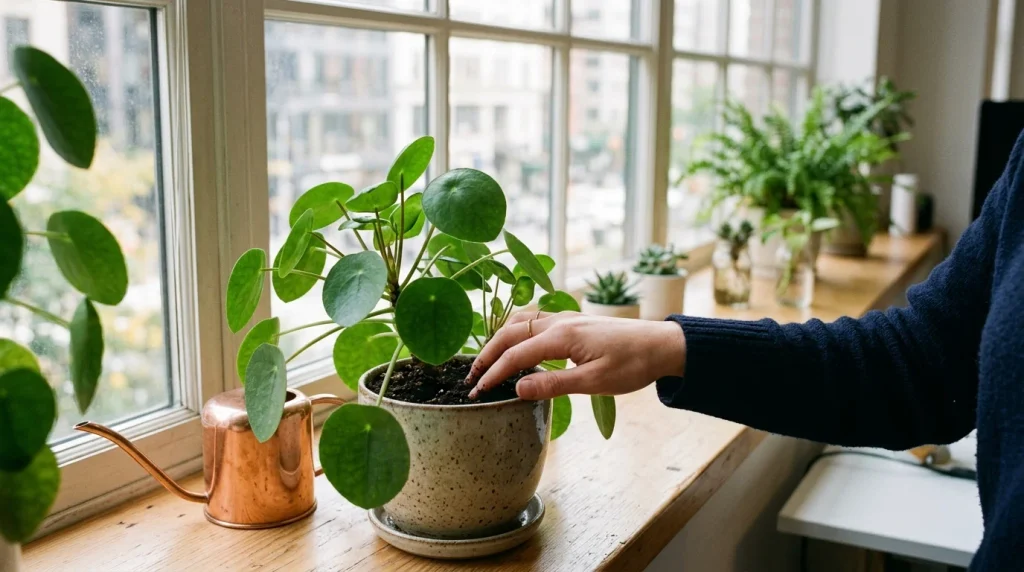
Just like positioning your product in the right market, placing your plant in the right environment eliminates 80% of downstream issues. The chinese money plant craves bright, indirect sunlight to power its rapid growth.
- The Ideal Spot: Position the plant near an east- or west-facing window, or a few feet away from a bright south-facing window. Desk setups with strong ambient room lighting or close proximity to light wells are perfect.
- Avoid Direct Scorching: Intense, unfiltered direct afternoon sun can burn its distinct dome-shaped leaves, causing dark brown spots.
- The Weekly Pivot (Rotation): This plant displays strong phototropism—it aggressively grows toward its light source. To maintain a balanced, symmetrical canopy, give the pot a 90-degree turn every time you step away for your weekly team catch-up or sprint review.
2. The “Soak and Dry” Watering Protocol
The single fastest way to kill a office plant is over-monitoring and overwatering. The chinese money plant prefers a dry-down period between waterings, making it ideal for founders who travel for conferences or pitch meetings.
Adopt a simple rule: When in doubt, wait. Only water when the top 1 to 2 inches of soil are completely dry to the touch. When you do water, soak the soil thoroughly until excess moisture drains out of the bottom, then empty the saucer. Never let the plant sit in standing water, as root rot is the ultimate deal-breaker for plant health.
If the leaves begin to look slightly droopy and feel soft, the plant is signaling that it is thirsty. It will bounce back rapidly within a few hours of receiving a good drink.
3. Soil and Drainage: Setting Up the Infrastructure
High-growth endeavors need a solid foundation, and for the chinese money plant, that means proper root aeration. Standard heavy potting soil traps too much moisture around the root system.
- Substrate: Use a well-draining potting mix rich in organic matter, amended with perlite or coarse sand (a 3:1 ratio of standard indoor mix to perlite works exceptionally well).
- Container Choice: Always select a pot featuring bottom drainage holes. Terracotta pots are highly recommended for startup offices because the porous clay draws excess moisture out of the soil, providing an extra safety margin against overwatering.
4. Office Climate Resilience
Modern office environments can present erratic microclimates due to commercial HVAC systems, sudden weekend temperature drops, and continuous air conditioning. The chinese money plant handles standard climate-controlled spaces with ease, preferring ambient temperatures between 60°F and 75°F (15°C to 24°C).
Simply keep the plant clear of direct blasts from heating vents or AC units. It requires no specialized humidifiers or misting routines, making it an unfussy, self-sustaining fixture for your desk.
The Founder’s Executive Care Summary
For quick reference across your team, here is the operational cheat sheet for maintaining a healthy plant on your desk:
| Care Factor | Requirement | Founder Action Item |
|---|---|---|
| Light | Bright, indirect light | Place near bright windows; rotate 90° weekly. |
| Watering | Allow top soil to dry completely | Water every 1–2 weeks; err on the side of underwatering. |
| Potting | Well-draining mix + drainage holes | Use terracotta containers with a perlite-rich soil mix. |
| Temperature | 60°F – 75°F (15°C – 24°C) | Keep away from direct draft vents and freezing windows. |
| Distress Signal | Drooping or curled leaves | Soft/drooping = needs water; Yellow/mushy = overwatered. |
Boosting Office Air Quality and Developer Focus
High-octane startup environments are breeding grounds for tight deadlines, endless sprint cycles, and grueling screen time. While high-end ergonomic chairs and mechanical keyboards dominate conversations around developer productivity, the ambient environment—specifically air quality and visual ecology—exerts a far greater influence on cognitive output. Integrating a Chinese money plant (Pilea peperomioides) onto a developer’s desk is more than an aesthetic upgrade; it serves as a low-maintenance biological tool engineered to improve micro-climates and sustain high-level problem-solving.
Natural Air Filtration in Tech Micro-Environments
Modern tech offices are densely packed micro-environments filled with high-powered workstations, multiple displays, synthetic carpets, and sealed HVAC systems. These conditions frequently lead to sub-optimal indoor air quality, characterized by elevated carbon dioxide ($CO_2$) levels and off-gassing volatile organic compounds (VOCs) such as formaldehyde and benzene from office furniture and electronics.
The Chinese money plant actively counters these invisible productivity killers through several key biological mechanisms:
- Carbon Dioxide Reduction: High ambient $CO_2$ levels in enclosed office spaces lead to lethargy, headaches, and impaired decision-making. Through photosynthesis, the plant draws in carbon dioxide and releases fresh oxygen directly into the developer’s immediate breathing zone.
- Ambient Humidity Modulation: Air-conditioned and heated offices severely dry out indoor air. The broad, peltate leaves of the Chinese money plant transpire moisture back into the micro-atmosphere, creating a localized humidity buffer. This subtle moisture increase helps soothe dry nasal passages and reduces static electricity around sensitive hardware.
- Particulate Trapping: The distinctive, smooth surface area of the plant’s coin-shaped leaves acts as a natural landing pad for airborne dust and micro-particles that would otherwise circulate through computer cooling fans and into respiratory tracts.
Mitigating Digital Eye Strain and Cognitive Fatigue
Software engineers spend up to 10 to 12 hours a day staring at dark-mode IDEs, terminal prompts, and complex pull requests. This persistent focal distance induces severe visual fatigue, while intense logical processing wears down executive function over the course of a day.
Incorporating biophilic elements like the Chinese money plant directly into the visual field leverages Attention Restoration Theory (ART). Unlike flat, artificial office decor, living plants engage soft fascination—a passive form of visual attention that allows the brain’s directed-attention mechanism (used heavily in coding and debugging) to rest and recharge.
| Developer Pain Point | Environmental Trigger | Biological Impact of the Chinese Money Plant |
|---|---|---|
| Digital Eye Strain | Monochromatic screens & light emitted from displays | Provides a natural focal point for the 20-20-20 visual relief rule, relaxing eye muscles with soft, natural green tones. |
| Afternoon Slump | Stagnant air & rising ambient indoor temperatures | Enhances local oxygen output and micro-circulation, maintaining cognitive alertness during post-lunch coding sessions. |
| Debugging Stress | High cortisol from blockers and tight deployment windows | Visual interaction with organic geometry lowers heart rate variability and reduces autonomic stress responses. |
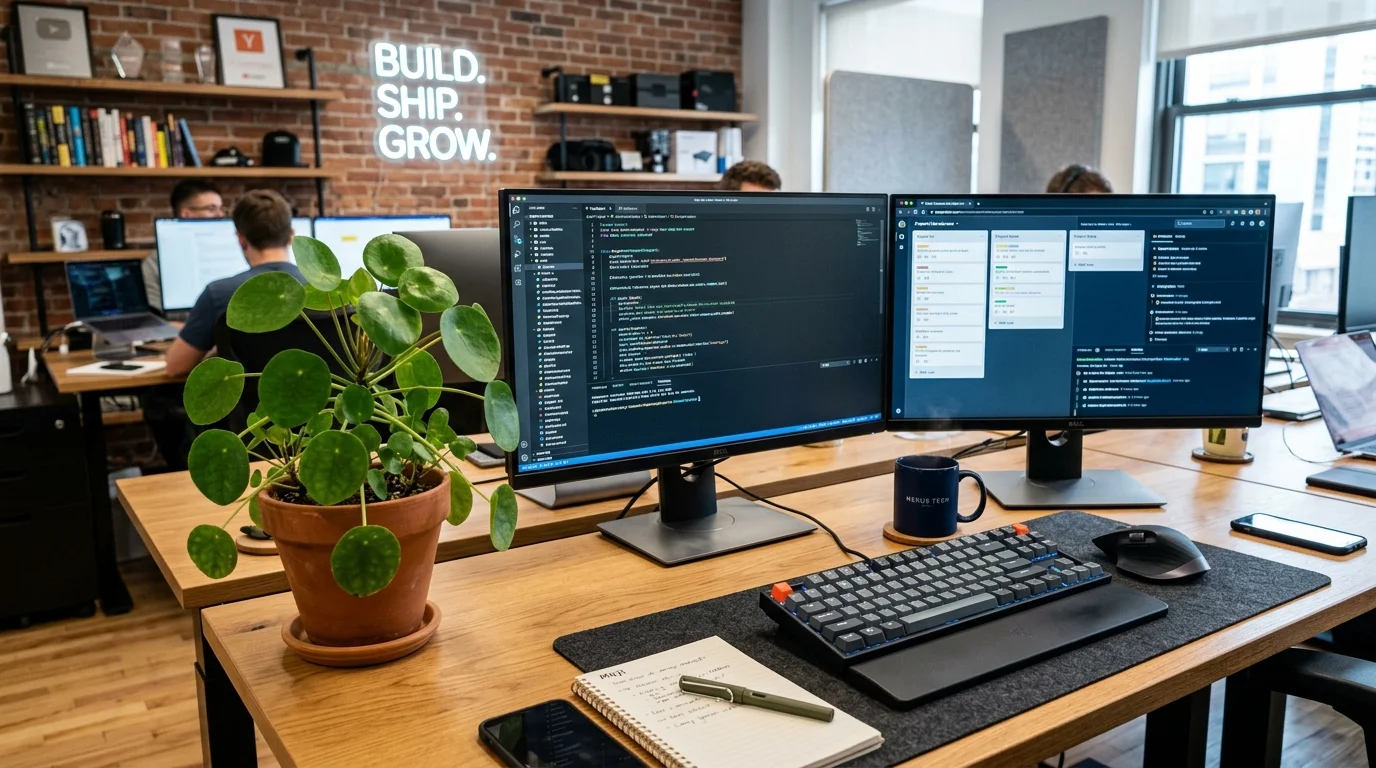
By pairing a well-placed Chinese money plant with a dual-monitor or ultra-wide rig, startups create a micro-workspace that balances high-intensity technical output with biological recovery, keeping engineering teams focused, clear-headed, and burnt-out free.
Aesthetic Appeal: Elevating Startup Workspace Culture
When implementing strategies for chinese money plant, it is crucial to analyze structural requirements and maintain high quality across every asset.
- Core Objectives: Focus on measurable outcomes and consistent execution.
- Key Action Items: Focus on measurable outcomes and consistent execution.
- Performance Metrics: Focus on measurable outcomes and consistent execution.
How to Choose and Position Your Desk Plant
When implementing strategies for chinese money plant, it is crucial to analyze structural requirements and maintain high quality across every asset.
- Core Objectives: Focus on measurable outcomes and consistent execution.
- Key Action Items: Focus on measurable outcomes and consistent execution.
- Performance Metrics: Focus on measurable outcomes and consistent execution.
Frequently Asked Questions
What makes chinese money plant effective?
By focusing on clear execution, high-intent targeting, and structured workflows, you achieve consistent performance.
How can beginners get started?
Start by prioritizing core fundamentals and establishing clear benchmarks.
Conclusion & Next Steps
Mastering chinese money plant requires consistent application and continuous refinement. Implement these strategies today to elevate your results.