7 Best Stocks and Shares ISA Platforms 2026 | Reviewed & Compared
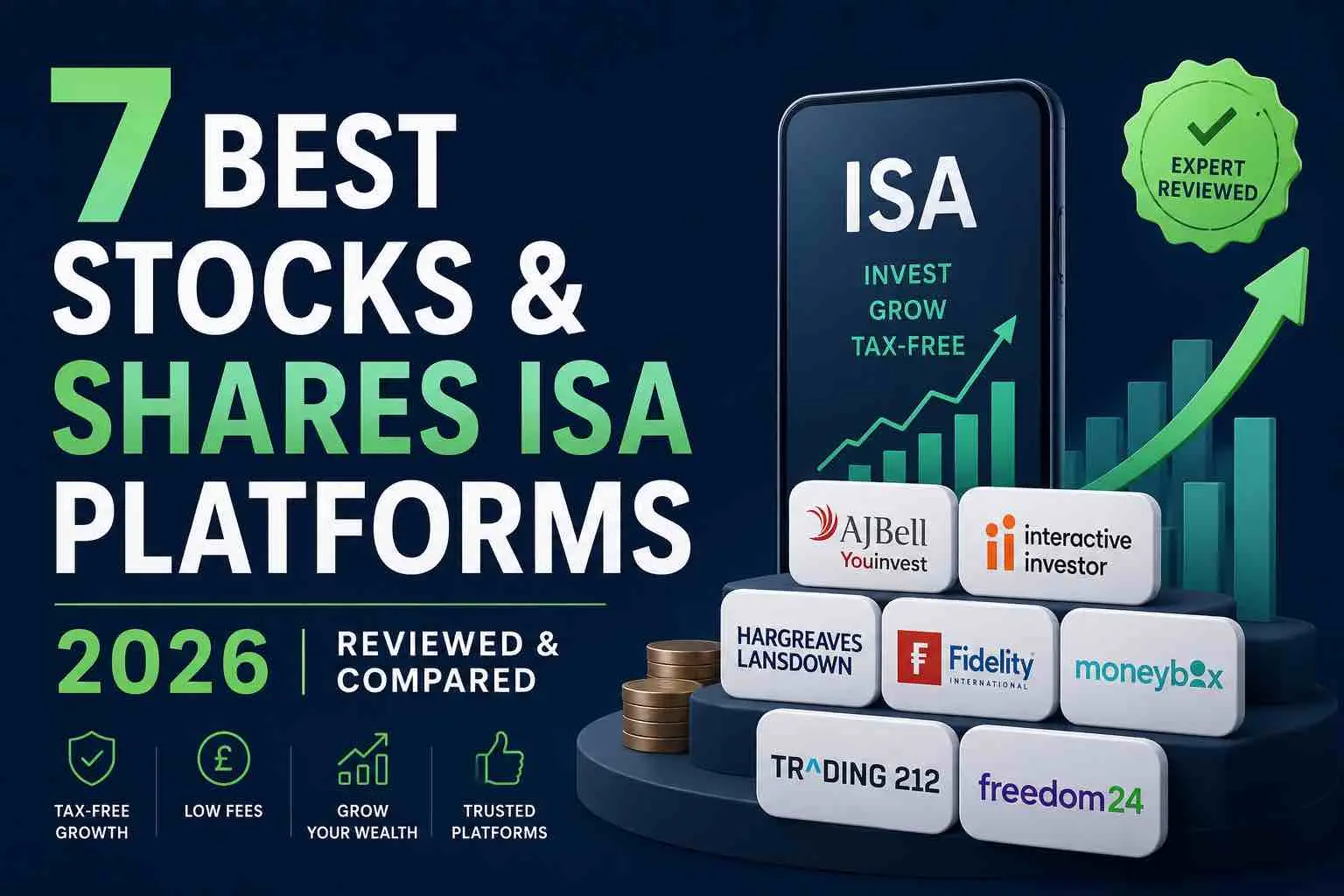
7 Best Stocks & Shares ISA Platforms for 2026
We've compared fees, investment choice, and user experience across the leading UK platforms — so you can keep more of what your money earns.
Updated May 2026 · Capital at risk · UK tax rules subject to change
Choosing a stocks and shares ISA platform is one of the most consequential financial decisions a UK investor can make. The accounts themselves are identical in tax treatment — but the fees, fund ranges, research tools, and user experiences vary enormously.
A platform charging 0.45% per year on a £50,000 portfolio costs £225 annually. One charging 0.15% costs £75. Compounded over twenty years, that gap runs into the tens of thousands. Getting this right matters.
Below are the seven platforms that consistently stand out in 2026, ranked to help you match your investing style to the right provider.
The 7 Best Stocks and Shares ISA Platforms
No. 1
Hargreaves Lansdown
Hargreaves Lansdown (HL) is the UK's largest investment platform — and in early 2026 it overhauled its pricing to stay competitive. Share-dealing fees fell from £11.95 to £6.95 per trade, and the platform charge dropped from 0.45% to 0.35% for ISA portfolios under £250,000. It remains the most feature-rich option on the market, with a curated "Wealth Shortlist" of funds, deep research tools, and a highly regarded customer service team.
Regular investing is free, making it ideal for savers who drip-feed money each month. The trade-off is cost: at larger balances, HL is still pricier than AJ Bell or flat-fee rivals.
Pros
- Best research tools in the UK
- Huge fund & ETF selection
- Free regular investing
- Excellent customer service
- Lifetime ISA available
Cons
- Still pricier than rivals at larger balances
- High FX fee for overseas trades
- Funds now charge a dealing fee
No. 2
Vanguard Investor
Vanguard is the gold standard for long-term, low-cost index investing. The platform fee is just 0.15% per year (capped at £375), and because it exclusively offers Vanguard's own funds and ETFs, the total cost of ownership is consistently among the lowest available. If you want global diversification through index trackers without fussing over active stock picks, Vanguard is hard to beat.
The limitation is choice: there are roughly 80 Vanguard funds available, versus thousands elsewhere. Active traders and those seeking individual shares should look elsewhere.
Pros
- Lowest platform fee of major providers
- Exceptionally low ongoing fund costs
- Excellent for set-and-forget investing
- Simple, uncluttered experience
Cons
- Vanguard funds only — no third-party picks
- No individual shares or investment trusts
- Higher minimum investment than rivals
No. 3
Trading 212
Trading 212 has no platform fee and no dealing commissions on its stocks and shares ISA — making it genuinely free for equity investors who don't need a fund marketplace. Its FX fee of 0.15% is also among the lowest tested, making it an excellent vehicle for holding international shares. Fractional shares allow investors to buy into expensive US stocks for as little as £1.
The platform lacks a full mutual fund range, has no SIPP, and no Junior ISA. The app-first design also makes it tempting to trade too frequently — a real behavioural risk for long-term ISA investors.
Pros
- Zero platform and dealing fees
- Lowest FX fee of any major platform
- Fractional shares from £1
- Clean, modern app
Cons
- No SIPPs or Junior ISAs
- Limited mutual fund selection
- App design can encourage over-trading
- No phone customer support
No. 4
AJ Bell
AJ Bell hits an appealing sweet spot between cost and capability. Its platform fee of 0.25% per year is meaningfully cheaper than HL's revised rate, share deals cost £5.00, and it offers a wide investment range including shares, funds, ETFs, and investment trusts across multiple markets. The "Dodl" companion app caters to simpler, guided investing while the main platform serves active self-directed investors.
It's an excellent choice for those who want full platform functionality — including a SIPP and Junior ISA — without paying Hargreaves Lansdown prices.
Pros
- Lower fees than Hargreaves Lansdown
- Full account range including SIPP & JISA
- Wide investment universe
- Good mobile and desktop experience
Cons
- £1.50 dividend reinvestment fee
- Not as cheap as flat-fee rivals at large balances
- Research less comprehensive than HL
No. 5
Interactive Investor
Interactive Investor (ii) uses a flat monthly subscription model rather than a percentage fee. Plans range from around £4.99 to £11.99 per month, making it increasingly cost-effective as portfolio size grows. A £200,000 ISA on Interactive Investor costs roughly £120–£144 per year in platform fees — a fraction of what percentage-based platforms would charge on the same balance.
The platform offers a curated "Super 60" fund list, a wide investment universe, and its own managed portfolios. Its £100 welcome credit for new ISA customers (as of early 2026) sweetens the deal further.
Pros
- Flat fee = big savings on large ISAs
- Low share-dealing fee (£3.99)
- Free monthly trades included
- Excellent investment selection
Cons
- Poor value for small portfolios
- Monthly fee is unavoidable
- Interface can feel dated
No. 6
Freetrade
Freetrade pioneered commission-free share dealing in the UK and remains a top choice for younger investors building their first ISA. Access to the stocks and shares ISA requires the Standard plan (£5.99/month), which unlocks commission-free trading in UK and US shares, ETFs, and investment trusts. The Plus plan (£11.99/month) adds interest on uninvested cash and a wider stock range.
Freetrade's clean, minimalist app makes investing approachable without being patronising. The absence of mutual funds limits it for those wanting a full fund marketplace.
Pros
- Excellent modern app experience
- Commission-free dealing
- Low minimum investment (£2)
- Interest on uninvested cash (Plus)
Cons
- ISA requires paid subscription
- No mutual funds / OEICs
- No SIPP available
- Less comprehensive than HL or AJ Bell
No. 7
Interactive Brokers
Interactive Brokers (IBKR) is the platform of choice for experienced investors who want institutional-grade access within their ISA. It connects to over 90 stock markets worldwide, and charges a FX conversion fee of just 0.03% — by far the lowest available. UK share commissions are a competitive £3 per trade. For investors building internationally diversified portfolios, the total cost advantage is substantial.
The interface is complex and can be daunting for beginners, though the GlobalTrader mobile app provides a simpler entry point. A £3 monthly minimum activity fee applies, waived when equivalent commissions are generated.
Pros
- 90+ global markets in one ISA
- Lowest FX conversion fee (0.03%)
- Competitive dealing commissions
- Institutional-grade execution
Cons
- Complex interface — not beginner-friendly
- Monthly activity fee if inactive
- UK fund range smaller than domestic rivals
Side-by-Side Fee Comparison
Fees are based on publicly available pricing as of May 2026. Verify current charges directly with each provider before opening an account.
| Platform | Annual Platform Fee | Share Dealing | FX Fee | Best For |
|---|---|---|---|---|
| Hargreaves Lansdown | 0.35% (shares capped £45/yr) | £6.95 | 1.0% | Most investors |
| Vanguard | 0.15% (max £375/yr) | Free (funds) / £7.50 (ETFs) | N/A | Passive/index investors |
| Trading 212 | Free | Commission-free | 0.15% | Zero-cost equity ISA |
| AJ Bell | 0.25% | £5.00 | 0.75% | Mid-range all-rounder |
| Interactive Investor | £4.99–£11.99/month (flat) | £3.99 | 1.5% | Large portfolios (£50k+) |
| Freetrade | £5.99–£11.99/month | Commission-free | 0.99% | Younger / app-first investors |
| Interactive Brokers | None* | £3.00 | 0.03% | Experienced global investors |
*£3/month minimum activity fee, waived when commissions exceed this amount.
How to Choose the Right Platform
Start with your portfolio size
Percentage-based fees (HL, AJ Bell, Vanguard) favour smaller portfolios. Flat-fee platforms (Interactive Investor) become significantly cheaper once your ISA exceeds roughly £50,000. Run the maths for your expected balance in five years, not just today's figure.
Know what you want to invest in
Index tracker-only investors need little more than Vanguard. Active stock-pickers wanting international exposure will find Interactive Brokers or Trading 212 better suited. Investors who want both funds and shares with full support should look at Hargreaves Lansdown or AJ Bell.
Consider how often you'll trade
Regular monthly investing is free on Hargreaves Lansdown and free within platform subscriptions on Trading 212 and Freetrade. Frequent share trading on a £6.95+ dealing-fee platform adds up fast; flat or commission-free dealing is materially better value for active traders.
Check for other accounts you might need
If you also want a SIPP, only some platforms offer it — HL, AJ Bell, and Interactive Investor are strong choices. Trading 212 and Freetrade don't offer SIPPs; Freetrade doesn't offer a Junior ISA either.
"The platform you choose matters far more than most people realise. On a £30,000 portfolio, the fee difference between expensive and cheap platforms compounds to thousands over a decade."
Frequently Asked Questions
How much can I put in a stocks and shares ISA in 2026?
The annual ISA allowance for the 2026–27 tax year is £20,000. You can put all of it into a stocks and shares ISA, or split it across different ISA types (cash, Lifetime, Innovative Finance). Since April 2024, you can also open more than one stocks and shares ISA in the same tax year.
Is a stocks and shares ISA better than a cash ISA?
Over the long term (typically five years or more), stocks and shares ISAs have historically outperformed cash ISAs significantly. However, investments can fall in value, so they carry more risk than cash savings. The right choice depends on your time horizon and risk tolerance.
Can I transfer my ISA to a different platform?
Yes. You can transfer a stocks and shares ISA to a new provider at any time without losing your tax-free status. Most platforms accept transfers in, though some charge an exit fee — check before moving. Transfers typically take two to four weeks.
What happens to my ISA if the platform goes bust?
Your investments are held in your name and are separate from the platform's own assets, so they are protected in the event of platform insolvency. Additionally, the Financial Services Compensation Scheme (FSCS) covers eligible claims up to £85,000 per person, per firm, in the event of a firm's failure.
Which platform is cheapest for a £50,000 ISA?
For a £50,000 ISA held mostly in shares, Trading 212 is effectively free. Vanguard costs around £75/year. Interactive Investor on its basic plan costs roughly £60–£144/year (flat). Hargreaves Lansdown, after its 2026 fee cut, would cost around £175/year — significantly more.
The Bottom Line
There is no single "best" stocks and shares ISA platform — the right choice depends on your portfolio size, investing style, and how much hand-holding you want. For most UK investors starting out, Hargreaves Lansdown offers the broadest capability, while Vanguard wins for pure low-cost index investing. Trading 212 is hard to beat on cost for equity-focused portfolios, and Interactive Investor becomes the cheapest option as balances grow.
The most important thing is to open an account, start investing, and let compounding do its work — inside the tax-free wrapper that every UK investor has access to.